The Real Reason Small Businesses Stay Small

Every small business owner dreams of scaling, more customers, more sales, more success. But after months of hard work, most stay in the same place. It’s not because they’re lazy. It’s because they’re stuck in a cycle, the survival cycle. They do just enough to stay alive but never enough to step back and build.
When you’re running a small business, every day feels like an emergency. Orders, bills, taxes, customers, suppliers, it’s endless. And when you live in survival mode, you make short-term decisions. You take quick clients instead of strategic ones. You underprice to stay “competitive.” You ignore your books until tax season.
But that’s the trap: Survival thinking blocks scalability.
. . .
The Financial Blind Spot
Most small businesses don’t fail because of bad marketing, they fail because of bad money habits.
Most owners chase revenue and ignore profit. They don’t track expenses, don’t separate personal and business money, and panic when cash flow dries up.
The Owner Dependency Problem
The biggest limit of any small business is its owner. You do everything, marketing, operations, support, and the business can’t move without you.
That dependency keeps you small. Because if you step away, everything stops. You don’t own a business; you own a busy job. Scalability starts when you build systems that work without you.
“Small businesses stay small because they think like small businesses.“
The Pricing Fear
Many small businesses stay small because they undercharge. They believe being affordable makes them competitive, when it actually keeps them stuck.
Low prices attract high-maintenance clients and destroy your profit margin. You end up working harder for less. Raising your prices isn’t arrogance, it’s alignment. Charge based on value, not insecurity.
Pricing isn’t just math, it’s positioning.
The “Marketing Over Management” Trap
Most owners believe more marketing equals more growth. They chase exposure before fixing their foundation. But marketing only amplifies what already exists. If your systems are weak, marketing will just multiply your problems.
Your goal isn’t just to sell more, it’s to handle more without breaking.
The “Marketing Over Management” Trap
Scaling a business is less about hustle and more about habits. Here’s what actually grows companies sustainably:
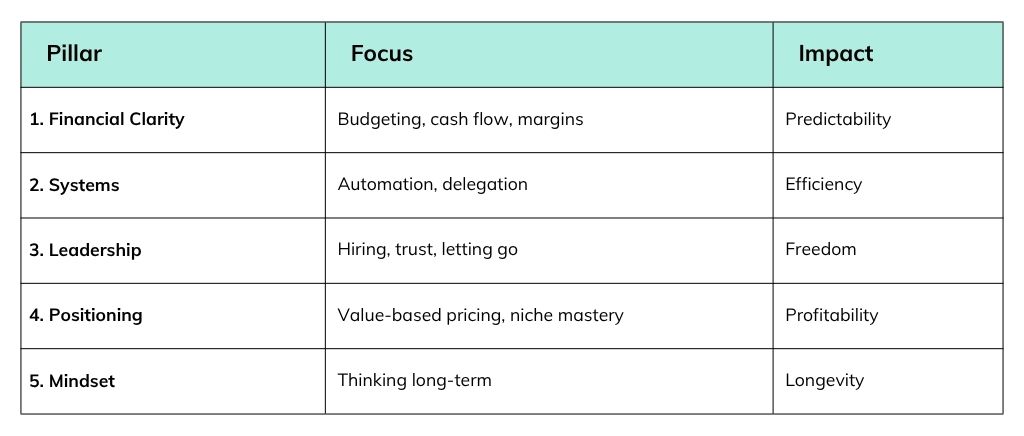
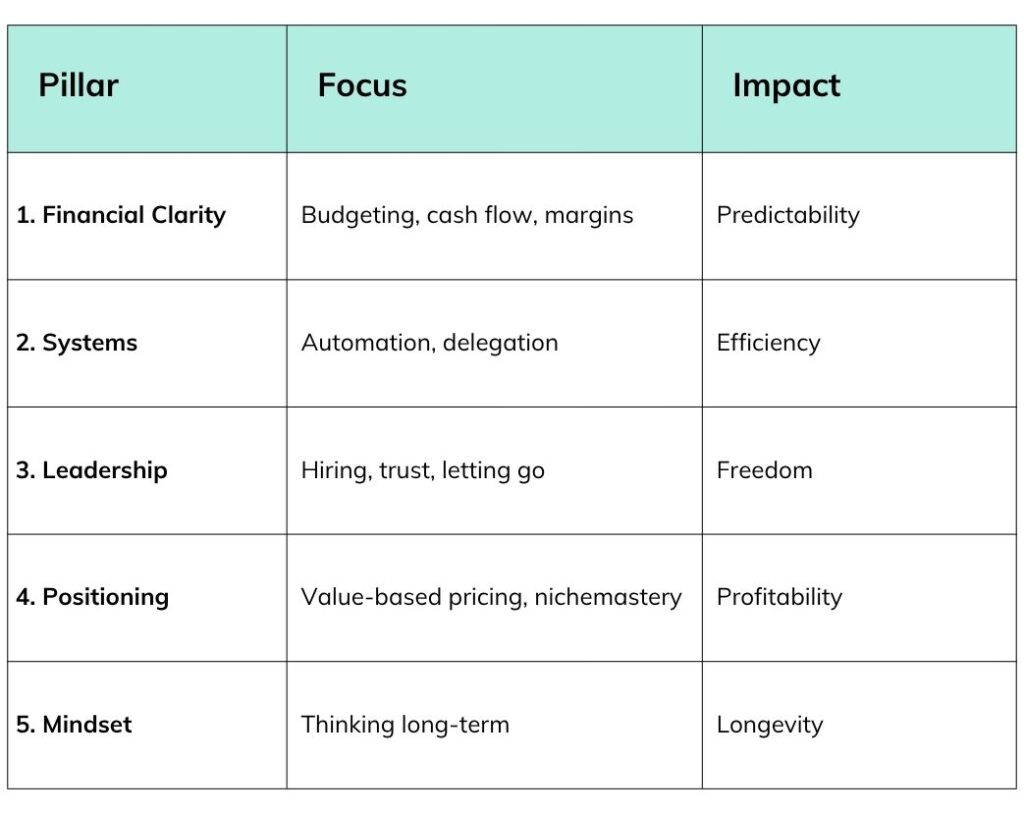
The reason most small businesses stay small is that they never fully develop all five. They grow horizontally (doing more of the same), not vertically (building systems, structure, and leverage).
The Hidden Enemy: Comfort
After a while, “small” starts to feel safe. You know every client, every task, every number. But the market doesn’t stay still, costs rise, competition changes, and technology moves on. If you’re not building systems that grow while you sleep, you’re just creating work that never ends.
. . .
Small businesses don’t stay small because of competition. They stay small because they never outgrow their mindset. They want profit without planning, freedom without delegation, and growth without structure, but success demands all three.